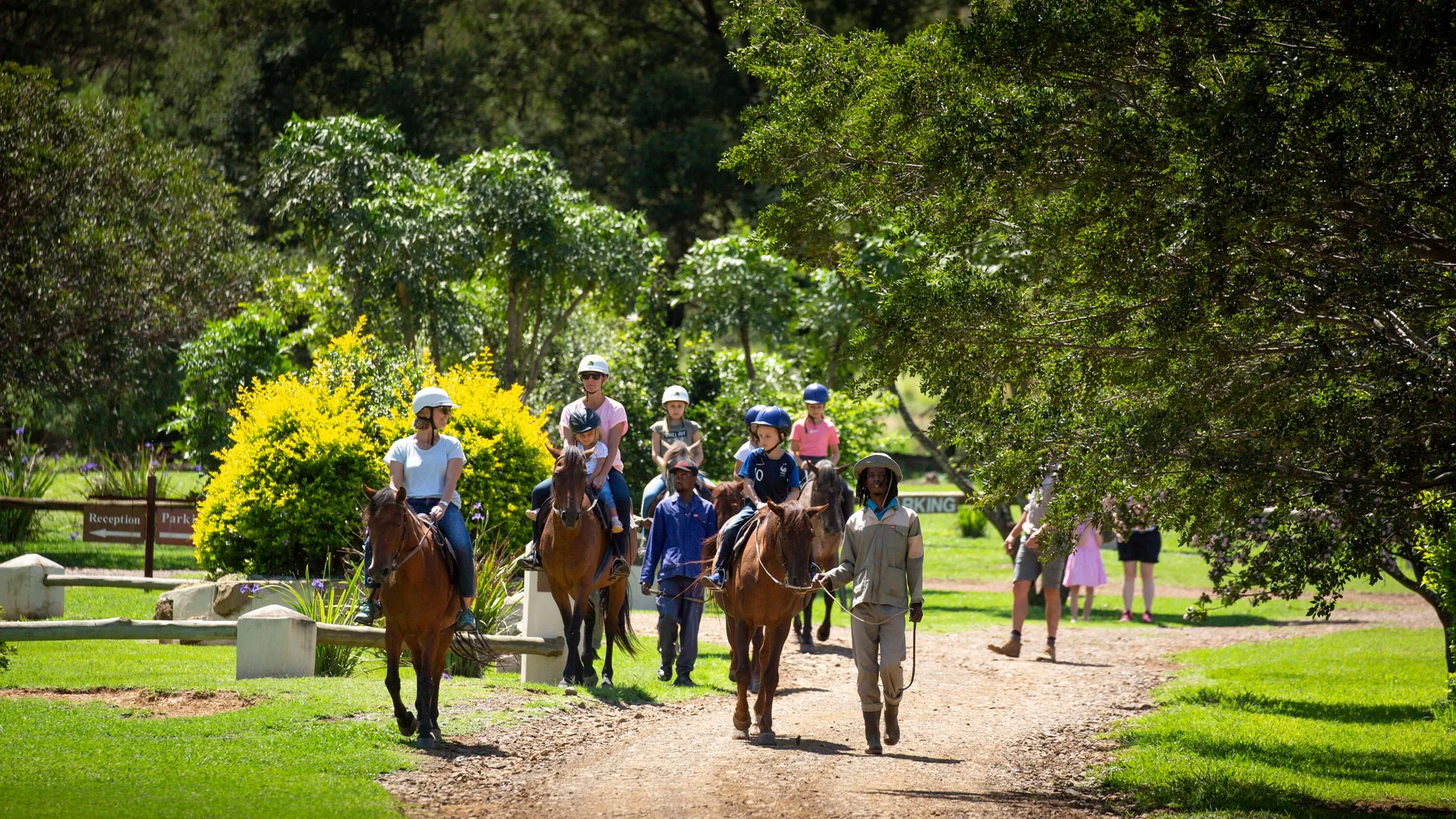
Horse riding is built around balance, posture, communication, control and confidence. The aim is never to force the horse, but to develop a clear, calm and consistent way of talking to it. Here are the basics of horse riding for beginners: what every first-time rider at Berghouse should know before setting off.
Riding at Berghouse
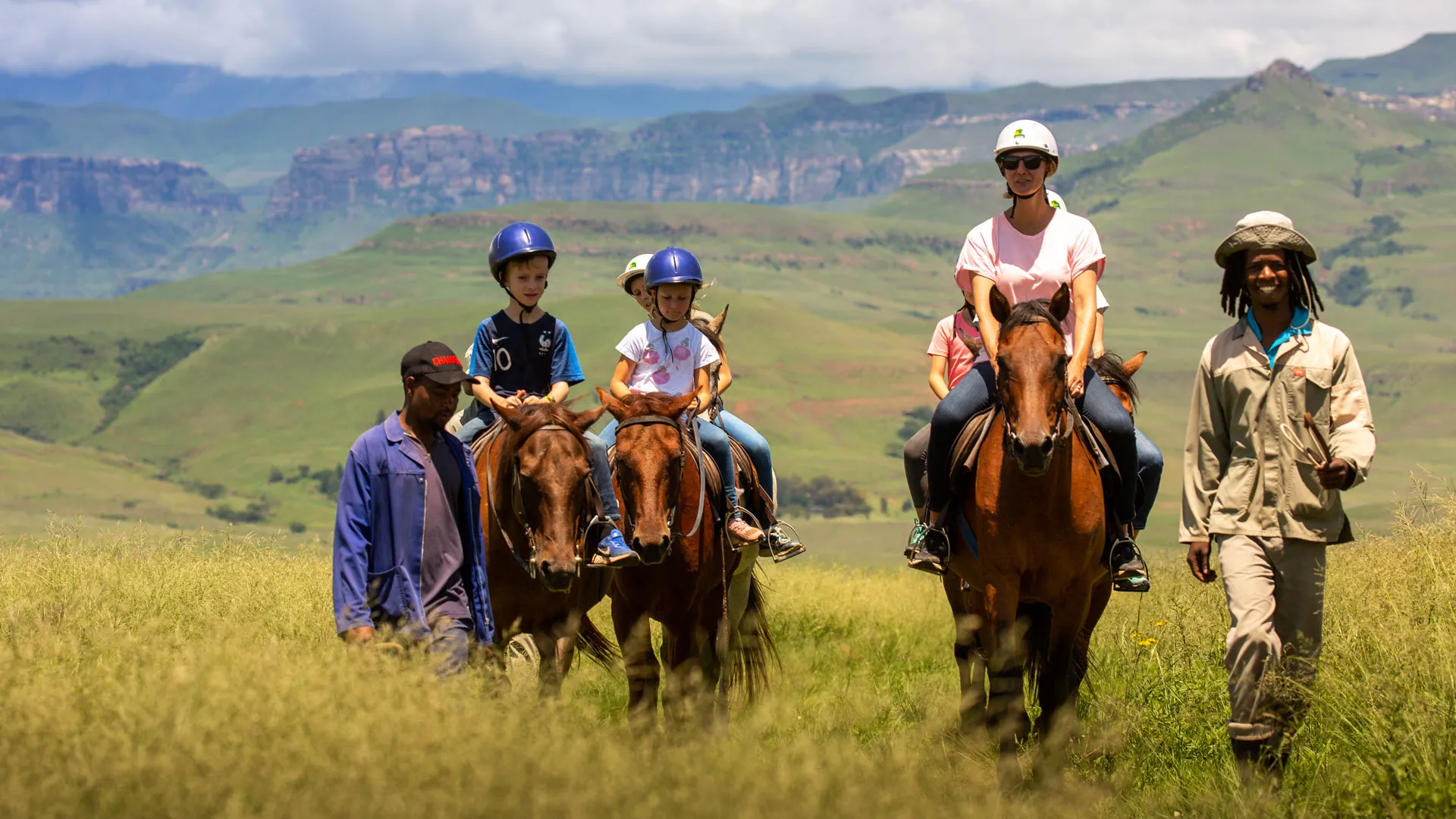
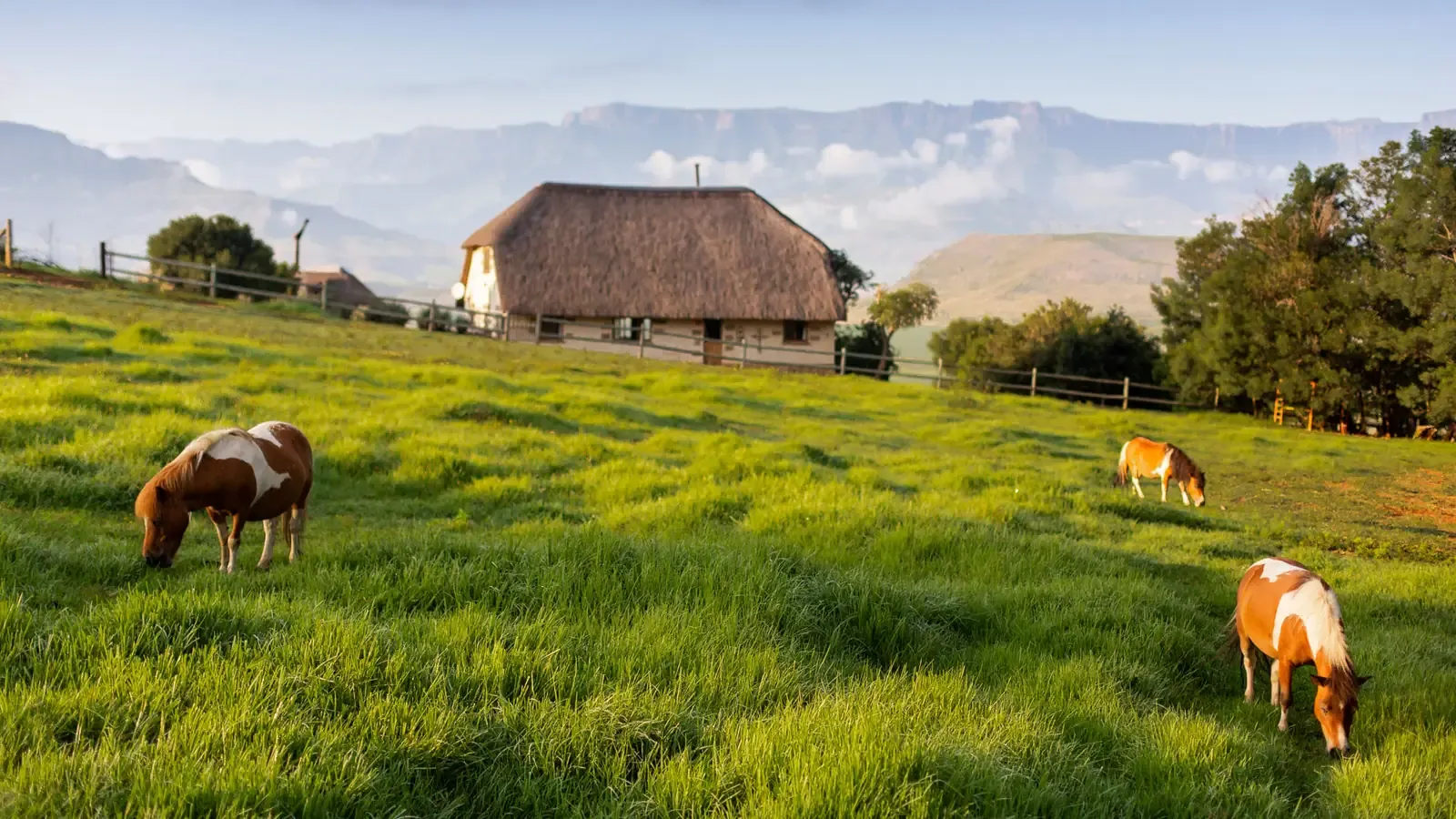
- Guided rides on our Basuto crossbred ponies, from 1 to 3 hours, at R345 per person per hour.
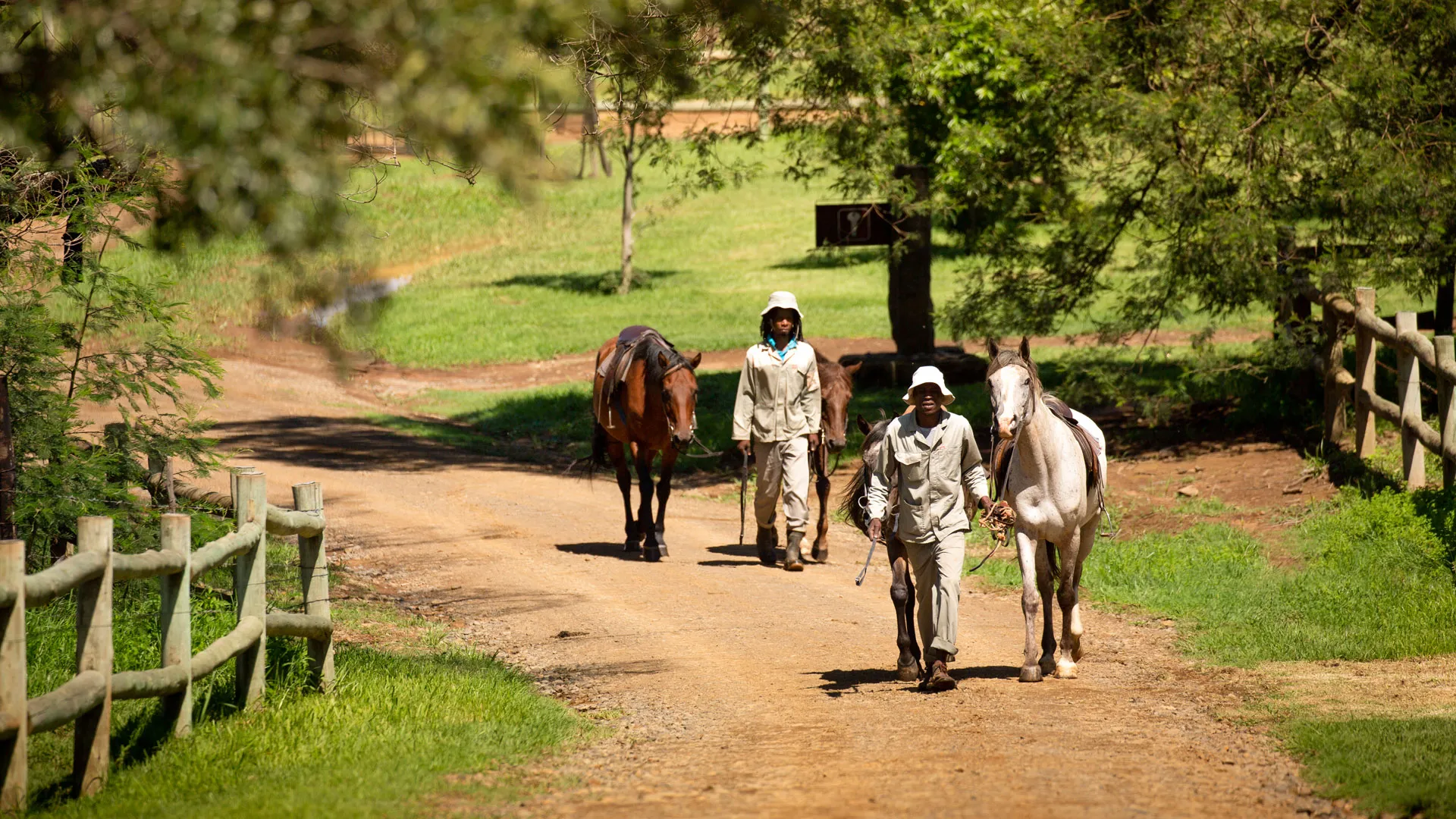
- Never ridden before? You can ask the guide to lead your pony on a lead rope.
- Pony rides for children, about 15 minutes, R50 per child.
- Rides run during the week, not on Sundays. Please arrange your ride with management before you arrive.
Full details, rates and scenic trail options are on our horse riding in the Drakensberg page.
1. Safety first
- Always wear a properly fitted riding helmet.
- Wear closed shoes or boots with a small heel so your foot cannot slip through the stirrup.
- Approach the horse calmly and from the left side.
- Never walk directly behind a horse.
- Learn to mount, dismount and hold the reins safely before you ride on your own.
2. A balanced riding position
A balanced position lets the horse move freely and makes your signals clearer. Think of a straight line running from your ear to your shoulder, hip and heel.
- Sit upright but relaxed, in the centre of the saddle.
- Keep your shoulders back and soft.
- Look where you want to go, not down at the horse.
- Keep your heels slightly lower than your toes.
- Let your knees rest against the saddle rather than gripping.
3. The reins
The reins are for communication and direction. They are not for holding yourself on.
- Hold the reins gently but securely.
- Keep your hands quiet and roughly level.
- Never pull continuously on the horse's mouth.
- To turn, use the reins together with your body and legs.
- Release is as important as pressure. When the horse responds, soften.
4. Using your legs
Your legs tell the horse what you want it to do.
- A gentle squeeze with both legs asks the horse to move forward.
- Your inside leg keeps the horse's bend and direction.
- Your outside leg controls the horse's hindquarters.
- Avoid constant kicking. The horse should respond to a light aid.
5. Balance, not grip
Good riding comes from balance rather than from squeezing the horse.
- At the walk, let your hips move naturally with the horse.
- Keep your upper body relaxed.
- Don't bounce or stiffen your back.
- As you progress to the trot, a stable lower leg and a relaxed seat matter even more.
6. The basic aids
- Legs: forward movement, bend and control.
- Hands and reins: direction, speed and stopping.
- Seat: balance, rhythm and subtle communication.
- Voice: reinforcement and reassurance.
- Eyes: direction and awareness.
The best riders combine these so smoothly that the communication becomes almost invisible.
7. Starting, stopping and turning
- To go forward: look ahead, sit balanced and apply both legs gently.
- To slow down: sit deeper, stop following forward with your hands and close your fingers softly on the reins.
- To stop: sit tall and deep, close both hands gradually and use your legs as needed to keep the horse straight.
- To turn: look towards where you are going, use the inside rein to indicate the direction and support the turn with your legs and outside rein.
8. Learning the gaits
A beginner learns in this order: walk, then trot, then canter. At each stage, learn to control:
- direction
- speed
- rhythm
- balance
- stopping
There is no need to rush into faster work. In horse riding for beginners, a good, controlled walk and trot are the foundation for everything that follows.
A horse responds best to clear, calm and consistent signals. If something isn't working, a stronger aid is rarely the answer. Check your balance, posture, rein contact and leg position first.
Your first ride at Berghouse
Getting on and off
- Ask the guide to hold the horse while you get on.
- Mount from the left side, from a mounting block or step if there is one.
- Take the reins in your left hand, put your left foot in the stirrup and hold the front of the saddle.
- Step up, swing your right leg over without touching the horse's back, and sit down gently.
- To get off, take both feet out of the stirrups, lean forward, swing your right leg over and slide down with soft knees. Keep hold of the reins.
Trail etiquette
- Follow the guide's instructions and stay behind the lead horse unless asked otherwise.
- Keep about one horse length between you and the horse in front.
- Walk when the guide walks. Only trot or canter when the guide says so.
- No sudden movements, shouting or flapping jackets. Keep phones away while moving.
- Tell the guide early if you feel unsure or would like to slow down.
Hills
- Uphill: lean slightly forward, take your weight off the horse's back and give with your hands so it can stretch its neck.
- Downhill: sit tall and slightly back, heels down, keep a light steady contact and let the horse pick its way.
- Don't let your horse rush up or down. Steady is safer and kinder.
If your horse stops or becomes nervous
- Stay calm and breathe. Horses read your tension.
- Check your own position first, then ask again with a light leg aid.
- If it has stopped to look at something, give it a moment, then ask quietly to walk on.
- If it gets nervous, sit deep, keep a soft contact, speak quietly and turn it towards the guide's horse. Don't pull hard or kick.
- Tell the guide. If you'd feel happier, ask for your pony to be led on a lead rope.
Ready to try it? Guided rides of 1 to 3 hours leave from Berghouse during the week (not on Sundays). Please arrange yours with management before you arrive.