The checklist for the estate runs to 249 species. Some are garden birds you will see from the cottage door. A few are birds people drive a long way to find.
What is on the list
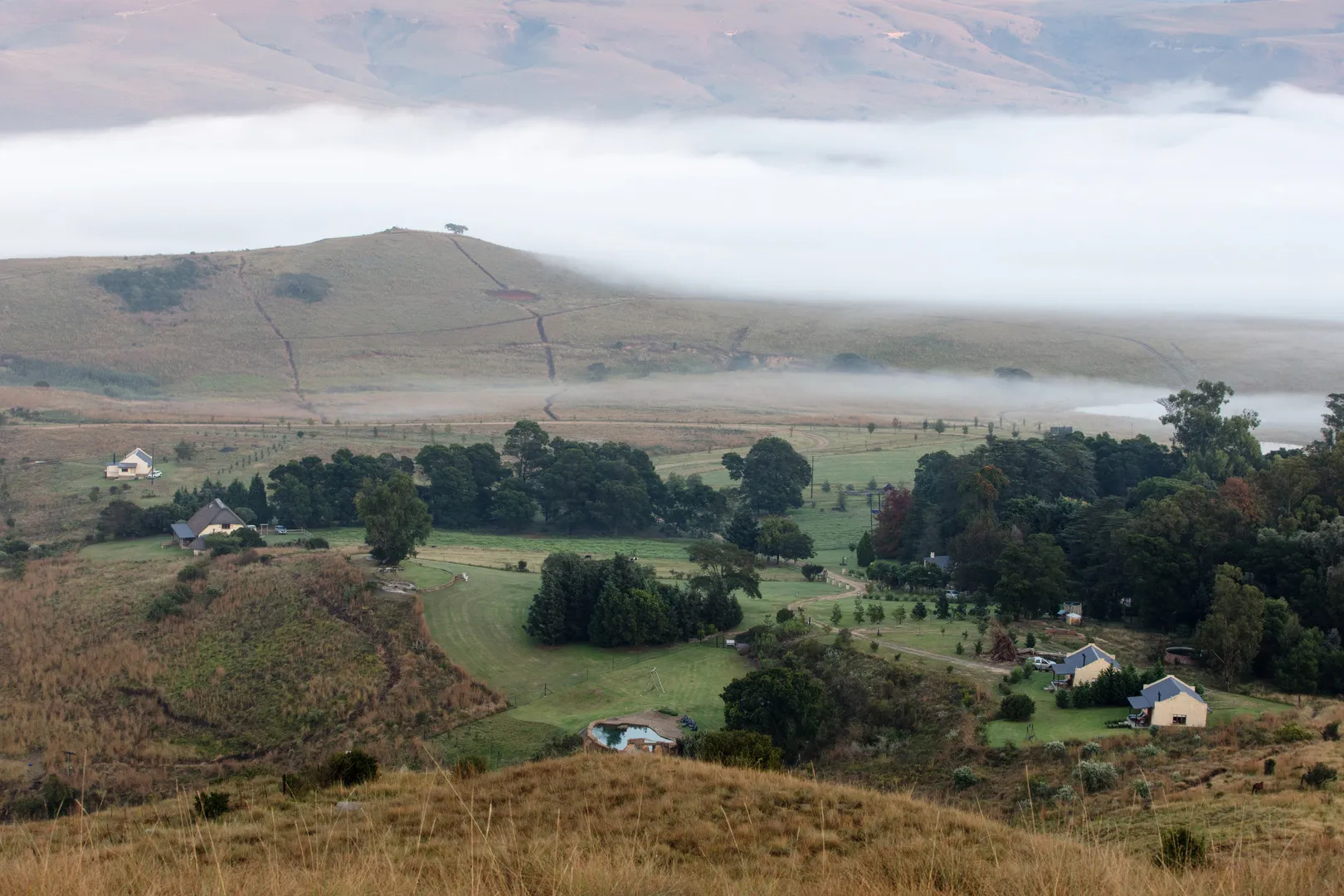
Drakensberg birding usually means two things at once: the wetland and grassland birds on the lower farm, and the specials up against the escarpment. The estate list covers both. It is kept by family, fourteen of them, and it records what has been seen on the property rather than what the region might hold.
All three cranes
Every one of southern Africa's three cranes is on the list. The Blue Crane is South Africa's national bird and the one most often seen on the open grassland. The Grey Crowned Crane turns up near water. The Wattled Crane is the scarcest of the three and the one worth stopping the car for.
The Drakensberg specials
Seven endemics and near-endemics are on the checklist. These are the birds that bring serious listers to this stretch of the berg:
- Rudd's Lark
- Bush Blackcap
- Buff-streaked Chat
- Drakensberg Rockjumper
- Mountain Pipit
- Yellow-breasted Pipit
- Drakensberg Siskin
Of those, the Buff-streaked Chat and the Drakensberg Rockjumper are the two you are most likely to come across without going looking for them.
Most of the grassland birds keep their distance and the raptors are usually seen high up. The checklist is arranged by family, which makes it quicker to work through in the field.
Overhead
Both the Bearded Vulture and the Cape Vulture are on the list, along with Verreaux's Eagle, Martial Eagle, Jackal Buzzard and Lanner Falcon. The Secretarybird is here too, though it walks the grassland rather than circling above it.
The full list is on the site, grouped by family and marked for the common species, the Drakensberg endemics and the Red List birds.