Drakensberg birding at Berghouse starts with a checklist of 249 species. Nine of them carry a small red mark, and those nine are what this post is about.
What the red mark means
The Berghouse birding checklist groups its 249 species into 14 families and uses three marks: common, for birds that are easy to notice; endemic, for Drakensberg endemics and near-endemics; and red, for species on the Red List.
The Red List is the record of birds whose numbers are under threat. A red mark does not mean a bird is a stranger here, though. Five of the nine are marked common as well, which puts them among the birds the checklist expects you to notice.
The five you are most likely to notice
These are the Red List birds the checklist also marks common. All five are big, and most are seen in the air, so look up as often as you look around.
- Secretarybird: tall and long-legged, it hunts on foot and stamps on what it finds.
- Bearded Vulture: the bone eater. It carries bones up and drops them onto rock to break them, then eats the pieces.
- Cape Vulture: a big, pale vulture that nests and roosts on cliffs, usually in company.
- Verreaux's (Black) Eagle: jet black with a white V on the back, and a hunter of dassies on rocky ground.
- Martial Eagle: one of the largest eagles in Africa, often seen soaring very high.
Our resident Secretary Birds are the easiest of the five. They stalk their prey on the hill slopes, out in the open, and once you know the shape you can pick one out from a long way off.
Four that are harder to find
The other four carry the red mark without the common one. They are on the checklist all the same, but on a short stay you would be lucky to meet one.
- Black Harrier: a slim raptor that hunts flying low over open ground.
- Wattled Crane: a tall grey and white crane of wet grassland and marshy ground.
- Grey Crowned Crane: the crane with the golden crest, found on the same wet ground.
- Southern Ground Hornbill: a large black bird that walks more than it flies, usually in a family group, with a deep booming call you may hear before you see it.
If you do see one of these four, note where and when, and tell us.
Both are birds of high ground, so look for them on a day up the mountain rather than in the garden.
Drakensberg birding from your cottage
What to bring for a stay here already lists binoculars, a camera and a bird book, and for Drakensberg birding those three cover most of it. A vulture at height is a dot without binoculars.
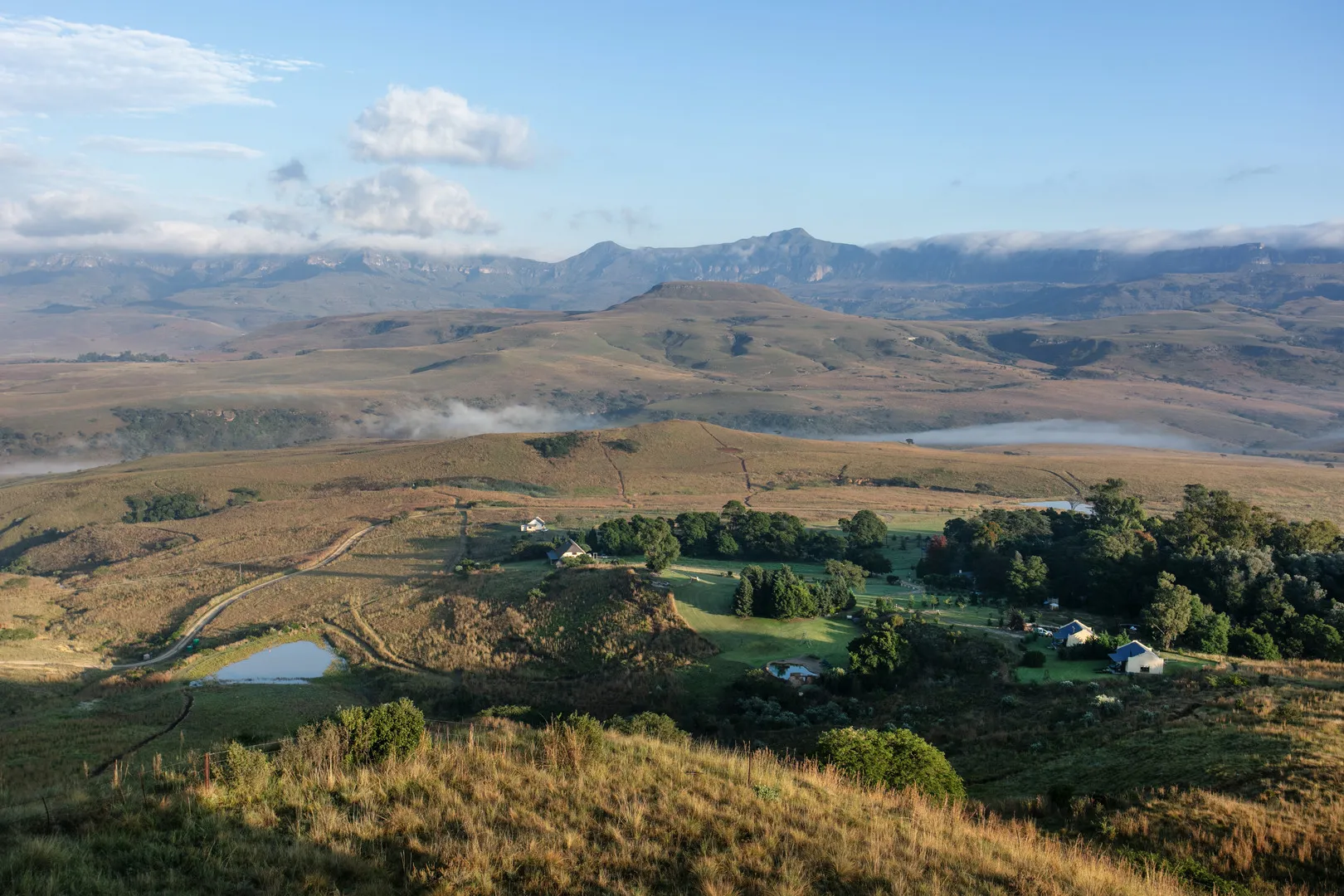
The land does the rest. Restoring indigenous vegetation, removing invasive alien plants and protecting natural water sources are part of how the farm is run, and grassland, cliffs and clean water are what birds like these depend on.
The full checklist is on the site, grouped by family, with the common, endemic and red marks beside each name, so you can tick them off as you go.