
The distinction matters. A report published by The Mercury on 24 July 2026 quoted KwaZulu-Natal Economic Development, Tourism and Environmental Affairs MEC Musa Zondi saying that representatives of KwaZulu-Natal, the Free State and the Kingdom of Lesotho had met and agreed that the project should move forward. The same report referred to a provincial budget for preliminary work and continued efforts to attract private investors.
Current position of the Drakensberg cable car project
The July 2026 update is the strongest recent sign that the proposal is active again. It describes an expanded regional tourism concept involving two South African provinces and Lesotho, rather than a cableway being planned by KwaZulu-Natal in isolation. Lesotho has reportedly suggested adding a winter tourism component on its side of the mountain, while hotels, restaurants and other visitor facilities are being considered as part of the wider destination.
However, the report also contains an important caution. The chairperson of the provincial Economic Development Portfolio Committee said the committee had not yet received a formal briefing. Questions about capital, the funding model, environmental responsibility, practical operation and private-sector participation also remain open.
In practical terms, the project appears to be in renewed coordination, preliminary planning and investor-development territory. That is meaningful progress after years of limited public movement, but it is not the same as completed approvals or construction.
What is proposed in the Northern Drakensberg?
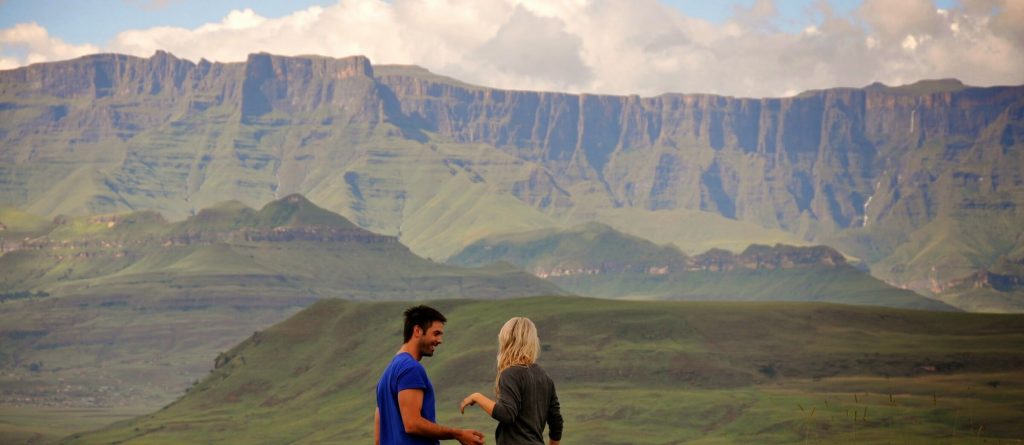
The historic concept centred on a lower station in the Busingatha Valley and an upper station near Mount Amery. The July 2013 feasibility study selected that route as its preferred option after comparing several possible sites. A separate engineering pre-feasibility study considered different cableway systems for the Busingatha-to-Mount Amery route.
The vision was always broader than a ride up a mountain. Earlier planning documents presented the cableway as an iconic tourism development that could improve access to high-altitude scenery, attract more visitors to the region and stimulate supporting businesses. It was also intended to make a dramatic mountain experience accessible to travellers who cannot complete strenuous high-altitude hikes.
The revived 2026 discussion appears to have widened the concept. The latest reporting refers to a cross-border tourism experience, possible accommodation and hospitality investment, and closer coordination between KwaZulu-Natal, the Free State and Lesotho. A final route and development package should nevertheless be confirmed through formal project documents rather than assumed from older studies.
Why the July 2026 update is significant
The cableway idea has moved through several cycles of enthusiasm, feasibility work and delay. The proposal dates back to at least the 1990s, while a 2000 study found that visitor levels at the time did not support a viable cableway. Provincial interest grew again from 2012, followed by detailed feasibility and engineering work in 2013.
The 2013 study itself recorded weaknesses in earlier work, including uncertainty over community consultation, financial modelling and environmental assumptions. In 2016, further studies were commissioned after key questions remained unresolved. Government promoted the idea again in 2019 and 2020, but the project then became relatively quiet in public reporting.
KwaZulu-Natal’s 2025/26 budget speech again described it as a cross-border initiative that the province wanted to fast-track. The July 2026 meeting therefore builds on a renewed policy push and adds evidence of direct engagement with the Free State and Lesotho.
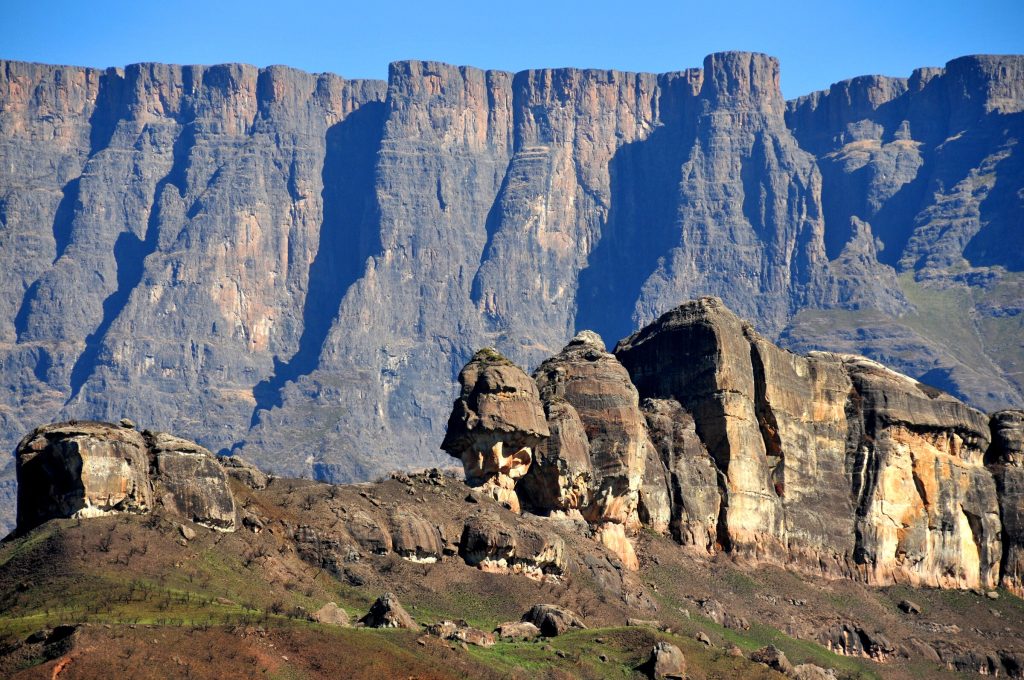
Potential tourism and economic benefits
Supporters see the project as a way to draw new visitors into the Northern Drakensberg and create a recognisable attraction with wider regional reach. If it is commercially viable and environmentally responsible, possible benefits could include:
- new jobs during development and operation;
- opportunities for local guides, transport providers, restaurants, accommodation businesses and craft producers;
- greater access to mountain scenery for visitors with limited mobility or hiking ability;
- longer stays if the cableway is integrated with a broader tourism experience; and
- stronger tourism links between KwaZulu-Natal, the Free State and Lesotho.
These benefits are possibilities, not guaranteed outcomes. They depend on the final ownership structure, local participation, visitor demand, funding and the quality of the environmental and tourism planning.
What still needs to happen before construction?
Environmental and World Heritage assessment
The proposed area is environmentally sensitive and lies in the immediate vicinity of the Maloti-Drakensberg Park World Heritage property. In 2023, the UNESCO World Heritage Committee specifically asked South Africa to assess the proposed cableway’s potential impact on the property’s Outstanding Universal Value and submit the assessment for review before making decisions that would be difficult to reverse.
The historic feasibility work also called for a full Environmental Impact Assessment before development. Biodiversity, visual impact, access roads, water, waste, construction methods and the effect on the mountain setting will all require detailed attention.
Community and traditional-authority participation
The preferred historic route involved community land in the Busingatha Valley. Earlier studies said community support and effective stakeholder engagement were vital, while later academic analysis highlighted consultation and communication as contentious parts of the project’s history. Any renewed proposal will need clear information about land, benefits, disruption, ownership and long-term local participation.
Funding, ownership and operating viability
A 2024 academic study recorded historic public estimates ranging from approximately R500 million to R1.3 billion. Those figures came from earlier phases and should not be treated as a current 2026 construction price. A credible contemporary budget, investor agreement, operating model and demand forecast are still essential.
Mountain weather and engineering
The Drakensberg’s terrain and wind conditions require specialist engineering. The 2013 engineering study considered wind operating limits and helicopter-assisted construction in inaccessible upper sections. The July 2026 report again raised strong winds as an issue that must be assessed through current technical and environmental studies.
Is the cable car approved or under construction?
Not on the evidence currently available. The July report says the three regional parties want the project to proceed and that preliminary work is being funded, but it does not provide a confirmed construction start date, a final approved route, an appointed cableway operator or a completed investment agreement.
It is therefore accurate to say that the Drakensberg cable car project is active again and moving through renewed planning. It would be premature to tell travellers that the attraction is being built or will open on a particular date.
What this means for Northern Drakensberg visitors now
The cableway remains a future proposal, but the Northern Drakensberg is already a destination for mountain scenery, outdoor time and restorative stays. Visitors should plan around attractions and routes that are currently open, check conditions shortly before travel and avoid building an itinerary around a cable car that does not yet exist.
For a present-day visit, explore the area’s off-site activities, review on-site activities and compare the available cottages. Changing access, weather and activity information should always be confirmed directly before departure.
Sources reviewed for this August 2026 update
- The Mercury, “Drakensberg cable car: KZN govt discusses project with Free State, Lesotho”, published 24 July 2026.
- KwaZulu-Natal EDTEA Budget Speech 2025/26.
- Graham Muller Associates, Feasibility Study for the Development of a Drakensberg Cable Car, July 2013.
- KUKA, Drakensberg Busingatha Cableway Engineering Pre-Feasibility Study, September 2013.
- Communication as power in South Africa: the proposed Northern KwaZulu-Natal cableway, South African Geographical Journal, 2024.
- UNESCO World Heritage Committee Decision 45 COM 7B.101, adopted in 2023.
This article reflects information available on 12 August 2026. Project status, scope and timelines may change when formal government, environmental or investor documents are released.